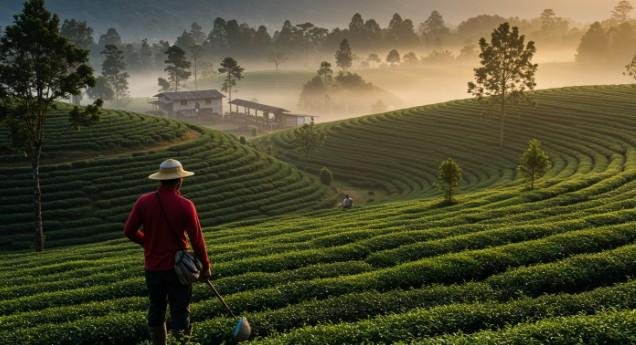
I used to think of tea as background noise in my day. It was always there, always comforting, and honestly, easy to overlook. That changed when I started tracing where my favorite blends actually came from. One late night of research pulled me deep into the economics, timelines, and strategy behind a tea farm, and I realized I had underestimated the business side of tea completely.
What I found was not a romantic hobby, but a structured agricultural enterprise with global demand, long planning cycles, and real financial discipline. This guide breaks down how tea production works from a business perspective, without selling services or pushing travel. It is about understanding the asset behind the cup.
What Is a Tea Farm and Why Is It Important for Entrepreneurs?
At its core, a tea farm is an agricultural operation dedicated to growing Camellia sinensis, the plant behind all true tea varieties. From a business standpoint, this operation controls the most critical input in the tea supply chain. Quality decisions made at this level affect pricing, branding, and long-term scalability.
For entrepreneurs, this matters because ownership or direct partnerships at the source create leverage. Instead of reacting to fluctuating market prices, businesses tied closely to production can plan inventory, manage quality, and build stronger brand narratives.
Tea production also offers demand stability. Consumption remains consistent across cultures and economic cycles, which makes source-level operations attractive to long-term thinkers.
Where Are the World’s Most Influential Tea-Growing Regions?
Understanding geography helps explain pricing power and market reputation.
Global Tea Production and Market Influence
Understanding geography is essential when evaluating pricing power and brand reputation in the tea industry. China and India remain the world’s largest producers, setting global benchmarks for volume and quality. At the same time, commercial tea production has expanded across Asia, Africa, and select regions of the United States, creating a more diversified global supply landscape.
India’s Regional Strength: Scale Meets Prestige
India’s tea-growing regions illustrate how scale and specialization can coexist. Assam leads in high-volume black tea production, supplying mass markets worldwide with consistent output. In contrast, Darjeeling commands premium pricing due to limited yields and strict geographic controls. Together, these regions show how reputation, origin protection, and consistency translate directly into long-term value.
China’s Diversification-Driven Tea Model
China’s approach highlights diversification at scale. Different provinces specialize in green, oolong, white, and fermented teas, allowing producers to serve multiple market segments without relying on a single product type. This regional specialization reduces risk, supports premium positioning, and gives Chinese producers strong adaptability in shifting global demand.
Why Do Investors View Tea Production as a Long-Term Asset?
From a financial perspective, tea behaves more like infrastructure than a seasonal crop. Once established, plants can remain productive for decades with proper care. That longevity reduces replanting costs and creates predictable output.
Margins increase as businesses move closer to finished products. Selling raw leaves offers stability, while processing and branding unlock higher returns. Many successful operations start conservatively and expand vertically over time.
The trade-off is patience. Returns are not immediate, but they compound steadily. For investors comfortable with delayed gratification, this model can be very attractive.
How Does Visiting a Tea Farm Help Business Decision-Making?

For business owners, visiting production sites is about due diligence not tourism. Seeing cultivation and processing firsthand clarifies quality standards, labor requirements, and operational discipline.
These visits often include explanations of plucking cycles, oxidation control, and drying techniques. Understanding these variables helps buyers assess consistency and negotiate better sourcing agreements.
Smaller operations usually require advance bookings, while larger estates may offer factory walkthroughs. Either way, firsthand exposure reduces risk when forming long-term supply relationships.
How Do Different Tea Types Influence Business Strategy?
All true tea comes from the same plant, but processing choices shape market positioning. This flexibility allows producers to adapt to demand without changing crops.
One Tea Plant, Multiple Market Positions
All tea comes from the same plant, yet processing decisions dramatically shape how each product is positioned in the market. This flexibility allows producers to respond to shifting consumer demand without changing crops, which is a major strategic advantage from a business standpoint. Processing choices determine flavor profiles, pricing tiers, and target audiences.
High-Volume vs Premium Tea Categories
Black tea supports large-scale, high-volume markets with steady and predictable demand, making it a reliable revenue driver. Green tea aligns closely with wellness-focused consumers, benefiting from health-conscious trends and consistent global interest. Oolong and white teas require more precise handling and labor, but their limited production allows them to command higher price points and appeal to premium buyers.
Fermented Teas as Long-Term Inventory Assets
Fermented teas such as pu’erh introduce an aging component that changes how inventory is valued. Instead of moving products quickly, producers can hold stock as it matures, often increasing its market value over time. This model positions tea less like a fast-moving consumer good and more like a collectible asset, offering unique opportunities for long-term profitability.
How to Evaluate a Tea Farm Business Step by Step

The first step is assessing location fundamentals. Climate, rainfall, soil acidity, and altitude determine long-term viability. Without the right environment, even strong branding cannot compensate.
Next comes production planning. Entrepreneurs must decide whether to focus on leaf sales, processed output, or packaged products. Each layer increases margin but also complexity. Many businesses reduce risk by partnering with existing processors early on.
Finally, distribution and brand positioning shape scalability. Consistent quality and a clear origin story allow producers to move beyond commodity pricing and build durable customer trust.
Frequently Asked Questions
1. Is the tea farm business suitable for beginners?
Yes, but only with realistic expectations. New entrepreneurs succeed when they hire experienced managers, rely on data, and respect long timelines. This industry rewards structure and patience more than experimentation.
2. How long does it take before returns appear?
Meaningful returns typically emerge between four and seven years. Early years focus on plant development and infrastructure. Cash reserves during this phase are essential for sustainability.
3. Can production succeed outside traditional tea countries?
Smaller operations in nontraditional regions succeed by focusing on organic practices, local branding, and direct sales. While scale is limited, margins can remain healthy with the right positioning.
4. What is the most common mistake new owners make?
Underestimating operational discipline. Inconsistent harvesting and weak processing controls reduce quality and pricing power. Treating production casually limits long-term success.
Why Tea Farm Business Rewards Patience
What surprised me most is how much this industry teaches restraint. Growth is slow, but it is steady. Quality compounds over time, and reputation becomes an asset.
For tea lovers with a business mindset, investing in production offers more than profit. It offers resilience, global relevance, and a product people return to daily. Approach it with respect for the process, and the rewards can last far longer than most trends.